
Ἀθήνη,
ἐξάγων σοφίαν, τέχνην, καὶ πόλεμον,
Τοῖς τολμῶσιν εἰσελθεῖν ἑξἀγών.
"Athena, bring forth wisdom, craft, and war, To those who dare enter the Hexágōn."
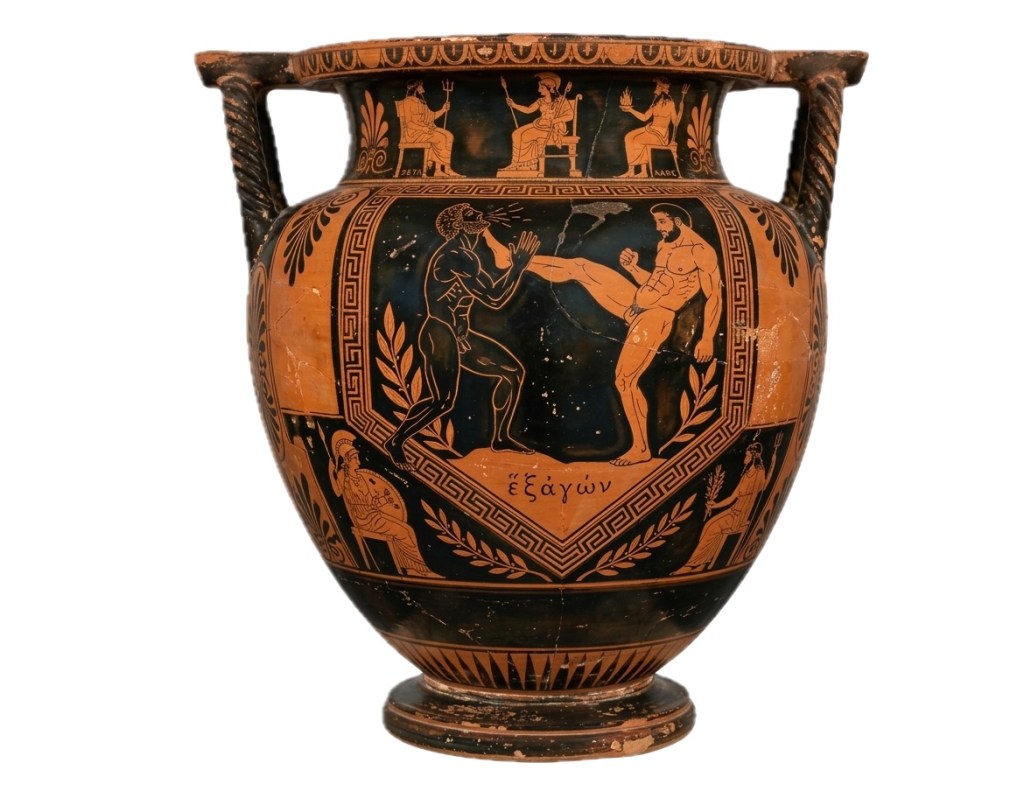
HEX- [ἕξ: relating to the number six]
-AGON [ἀγών: conflict, struggle, or contest]
Introduced at the Olympic Games of 648 BC, pankration (παγκράτιον: all-power) was the world’s first ‘mixed martial art’. In those elemental days of Olympians battling offensively and defensively with all their skill, the only forbidden unarmed combat techniques were eye-gouging and biting.
In Ancient Greece, the number six was symbolic of great power. The Primordial Gods of Sky and Earth created the Titans: six male and six female. The Titans deposed the Primordials, and created the six Olympian Gods (Zeus, Hera, Poseidon, Hestia, Hades, Demeter) who in turn dethroned the Titans.
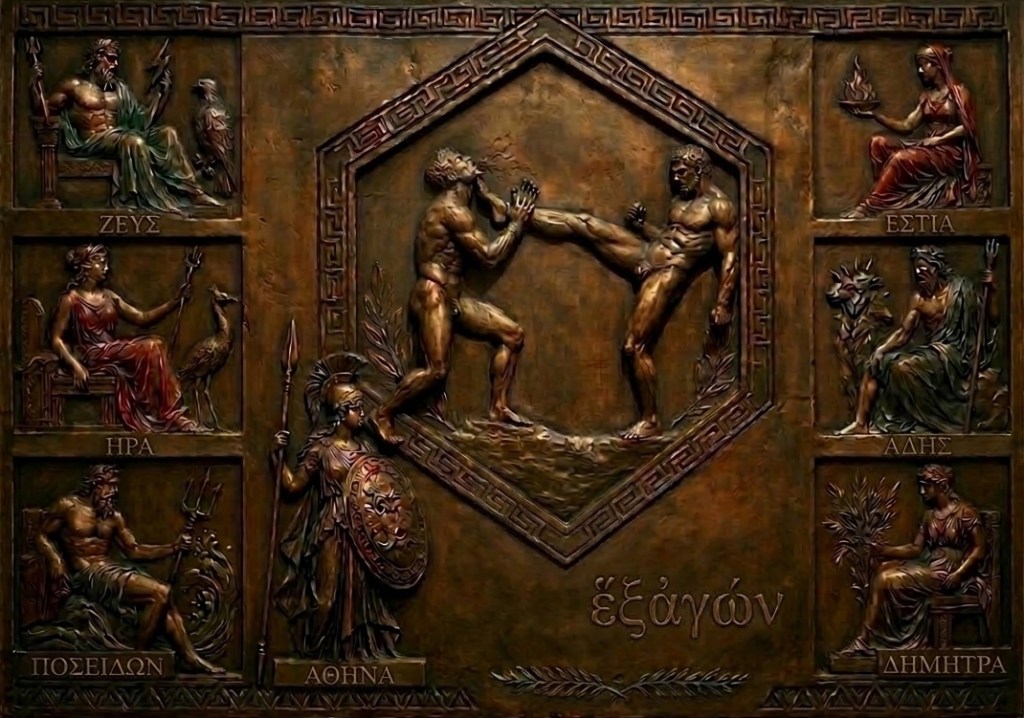
In mathematics, six is considered the first ‘perfect number‘ (1+2+3=6): a symbol of harmony, balance, and completeness.
Thus it was, in contests dedicated to Athena, the Goddess of Wisdom, Craft, and War, that the greatest pankration athletes would compete in a six-sided arena: The Hexágōn (ἕξἀγών).
The victor claimed the title of ‘Pantokrator’ (Παντοκράτωρ: all-powerful).
Through ages uncounted, this sacred ritual of unarmed combat skill has endured, passed down from these ancient champions to the fighters of today, ultimately culminating in the legendary…

HEXAGON FIGHTING CHAMPIONSHIP
 Hexagon Fighting Championship